

This Q&A is now read-only
Official Q&A: VEX V5 Robotics Competition 2025-2026: Push Back
3044: Regarding hidden wedge
<GG17>Our team participated in the Rodeo Signature Event. After the finals, we learned from another Ruiguan robot driver about a mechanism that caused us to lose all of the pushing competitions during the final matches.
The issue lies in a specific Ruiguan robot design feature: an extremely low and wide polycarbonate aligner mounted at the rear of the robot. During pushing matches, these robots do not attempt to engage head-to-head in a straight, parallel push. Instead, the driver intentionally avoids direct alignment and uses the rear polycarbonate aligner to wedge into one side of the opponent’s drivetrain wheels. This maneuver slightly lifts the opponent’s wheels off the ground, causing a loss of traction and power, allowing the Ruiguan robot to win the push or pin. This action occurs very quickly and often within three seconds.
Many drivers are aware of this technique, even though some teams may simply copy the design without fully understanding how to exploit it. Another tactic we were told about involves maximizing the size of the polycarbonate aligner. When the aligner is sufficiently large, even during a standard pushing interaction, one side of the opponent’s drivetrain or rear wheel can ride up onto the polycarbonate surface, resulting in a loss of traction without requiring precise driver control.
The first video below shows a clear example of this strategy. The blue Ruiguan robot was expected to push straight toward the red robot on the left to defend their blue balls. Instead, it deliberately reversed, moved to the top position (surprisingly away from the long goal), and then made a sharp right-angle turn to attempt to wedge the white and large polycarbonate aligner into one side of the red robot’s drivetrain. We avoided the initial attempt by backing away, which allowed us to push them back successfully. However, the blue robot then repositioned strategically and successfully wedged its polycarbonate aligner into our rear wheel, causing our drivetrain to lose power and ultimately resulting in our loss.
The second video below shows another clear example of this strategy. The blue Ruiguan robot repeatedly reverses to a top position (away from the long goal) at a specific angle and then makes a sharp right-angle turn to wedge the polycarbonate aligner into one side of the red robot’s drivetrain. Although we attempted to avoid having our wheels ride onto the polycarbonate, there was no way to avoid it as the polyarbonate is "huge".
So our questions are: Is this kind of wedge legal or not, as it is a design that could be used intentionally to lift other robots? In addition, is this kind of short lift (usually less than three seconds) legal or not? Thank you.
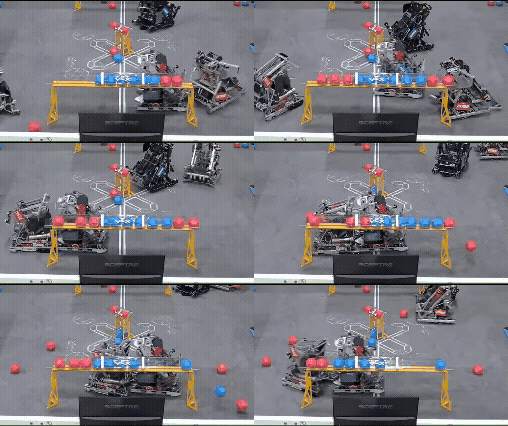
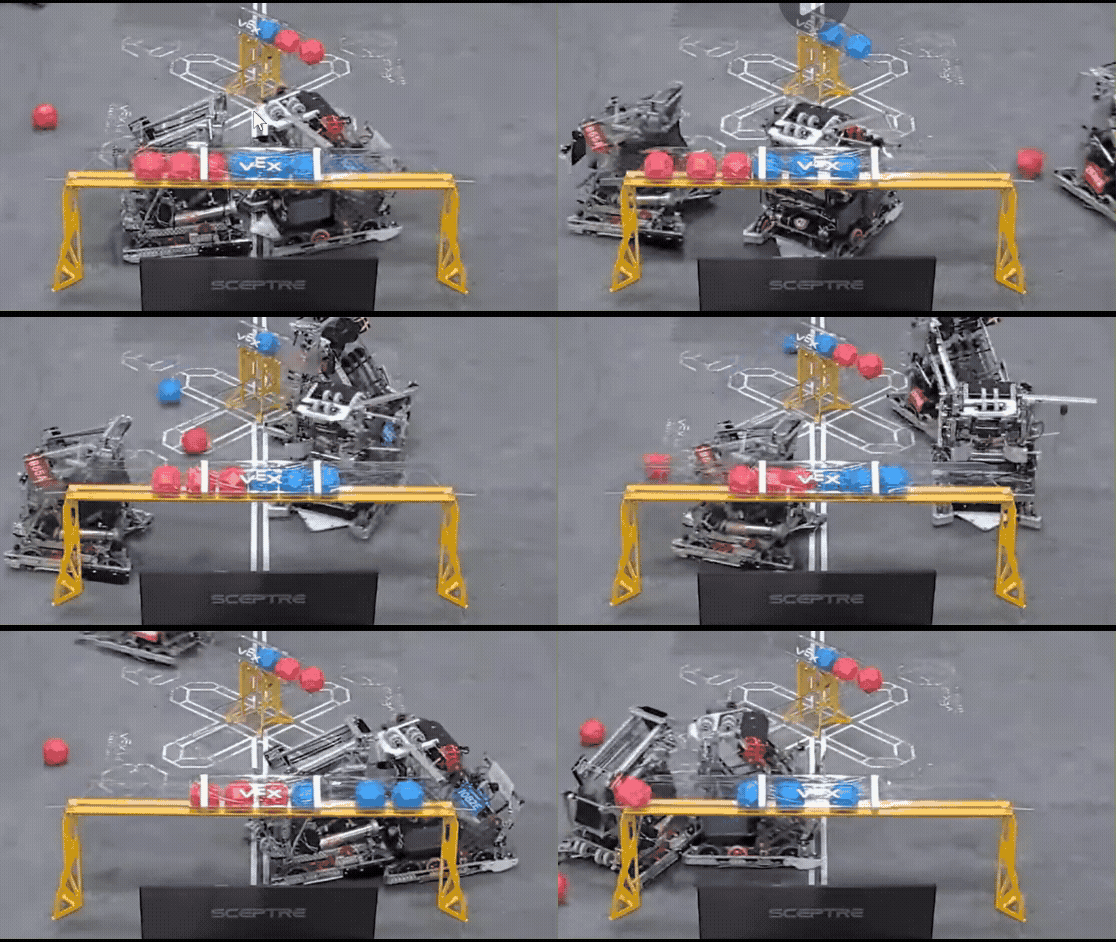
Lifting a robot is not, itself, against the rules. Neither is the wedge employed by the Robot in your question. See the definition of Holding and the details of rule <GG17>.
Lifting only becomes a Violation if it meets the game manual's definition of Lifting (controlling an opponent’s movements by raising or tilting the opponent’s Robot off of the foam tiles) and lasts longer than the allowed 3-count for Holding in rule <GG17>.
Lifting that meets the definition of Holding and extends beyond the limits in <GG17> is at least a Minor Violation, and can result in a Disqualification if the Head Referee determines that the Violation was Match Affecting.